

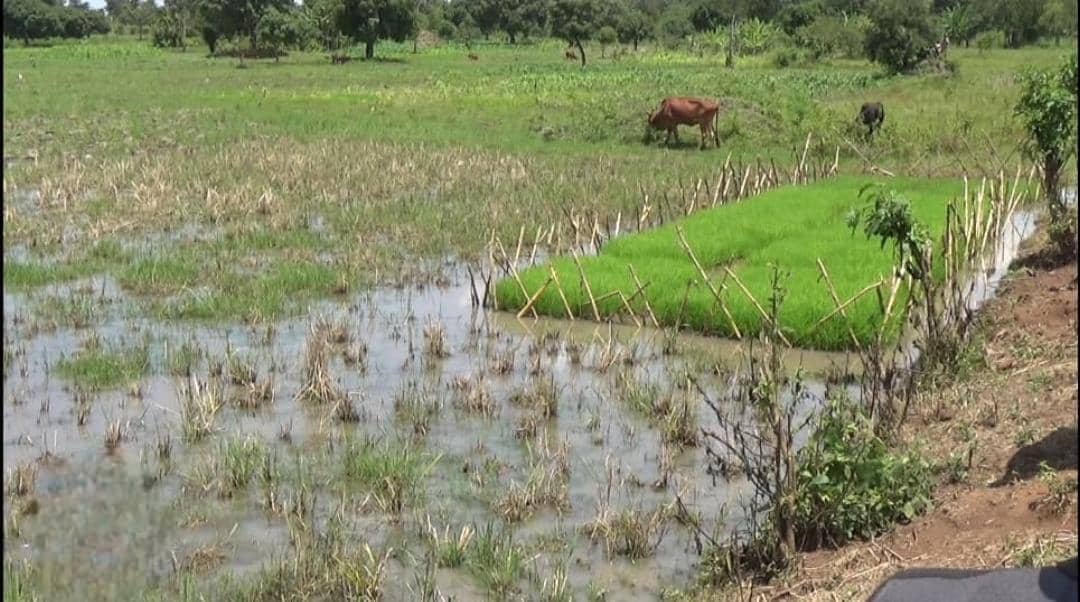
Communities living around wetlands in eastern Uganda have for decades relied on these ecosystems for farming and other livelihood activities.
In Nasenyi Village, Mugiti Sub-county in Budaka District, swampy areas have long supported crops such as rice and sweet potatoes, helping households earn an income and supplement their food needs.
Today, however, residents say the same wetlands that once sustained them are rapidly shrinking, with increasingly severe environmental consequences.
Local leaders and farmers report unusual changes in weather patterns, including delayed rainfall, prolonged dry spells, and sudden flooding, which they partly attribute to continued degradation of the Nasenyi wetlands.
“We are now living in desperate times,” said Naigaga Sumaya, the Woman Representative of Nasenyi Village.
“Most people here have no formal employment, and because of poverty, they turn to the swamps as their only source of income.”
She said high fertility rates, rapid population growth, and high school dropout levels, especially among young people, have intensified pressure on wetlands, with rice cultivation becoming the dominant livelihood option.
“But this has come at a heavy cost,” Naigaga said. “The weather has changed completely. Rains no longer come as expected, and when they do, we experience floods that destroy gardens, homes, and even roads.”
Recent data from the Uganda National Meteorological Authority supports these observations, showing that eastern Uganda has experienced increasing rainfall variability, longer dry spells, and more intense storms over the past two decades.
National climate assessments further indicate that Uganda’s average temperatures have risen by about 1.3 degrees Celsius since the 1960s, while rainfall patterns have become more erratic, a trend scientists warn will worsen as climate change accelerates.
Environmental experts say wetlands play a critical role as natural buffers, absorbing excess rainfall during wet seasons and releasing water gradually during dry periods.
Their destruction, they warn, weakens this natural regulation, increasing the risk of both flooding and drought.
For farmers like Kayemba Fahad, the situation presents a painful dilemma.
“We are told to stop cultivating in the swamps, but we simply have nowhere else to go,” he said. “Employment opportunities are very limited, and rice farming is the only way many families survive.”
Kayemba also questioned what he described as selective enforcement of wetland conservation laws, arguing that large-scale developments pose a greater threat than smallholder farming.
He cited activities linked to the Sino-Mbale Industrial Park, claiming they have had a significant impact on wetland systems.
“They have constructed dams and diverted water. Factories dump waste into the wetlands,” he said. “But instead of regulating that, authorities come after struggling farmers like us. It feels unfair.”
Residents say industrial activities have caused water blockages that disrupt natural water flow, leading to poor crop yields and unpredictable planting seasons.
Many report that the dry season has become longer and harsher, while rainfall is now too irregular to rely on.
Uganda has already lost more than 30 percent of its wetlands since the 1990s due to agricultural expansion, settlement, and industrial development.
In districts such as Budaka, where more than 80 percent of the population depends on farming, pressure on wetlands continues to intensify.
Environmental analysts say the situation in Nasenyi highlights a broader national challenge of balancing environmental protection with the survival needs of vulnerable communities.
Without alternative income sources, improved farming practices, and consistent enforcement of environmental laws across all sectors, residents fear both livelihoods and ecosystems will continue to deteriorate.
